When it comes to protecting your heart through diet, not all carbohydrates are created equal. The glycemic index (GI) is a ranking system that measures how quickly carbohydrate-containing foods raise blood glucose levels after consumption. First introduced in 1981, this classification system has become increasingly relevant as modern diets have shifted toward higher consumption of refined carbohydrates and processed foods.
According to research published in the Journal of the American College of Nutrition, the glycemic index provides a physiological assessment of a food’s carbohydrate content through its effect on postprandial blood glucose concentrations. This classification has proven especially valuable for understanding the connection between diet and chronic Western diseases associated with overconsumption and insulin resistance.
Understanding how different carbohydrates affect your blood sugar isn’t just about managing diabetes—it’s a powerful tool for cardiovascular wellness. With rising rates of heart disease, learning to navigate the glycemic index can help you make smarter food choices that support long-term heart health.
How the Glycemic Index Works Physiologically
The glycemic index is measured by calculating the incremental area under the blood glucose response curve after consuming 50 grams of available carbohydrates from a test food, compared to a reference food—typically pure glucose or white bread. As explained in nutritional science literature, this measurement captures how rapidly carbohydrates are digested and absorbed into the bloodstream.

It’s important to distinguish between glycemic index and glycemic load (GL). While GI measures the quality of carbohydrates—how quickly they raise blood sugar—glycemic load accounts for both quality and quantity. GL is calculated by multiplying a food’s GI by its carbohydrate content, then dividing by 100. This gives you a more complete picture of a food’s actual impact on blood sugar.
Several factors influence how quickly carbohydrates are digested and absorbed, including fiber content, food processing, cooking methods, and the presence of fat or protein in a meal. Foods high in fiber generally have lower GI values because fiber slows digestion, leading to a more gradual rise in blood glucose. Similarly, healthy fats like omega-3s can help moderate blood sugar response when included in a meal.
GI Categories and Food Examples
Foods are categorized into three GI groups based on their blood glucose response. According to MedlinePlus guidelines, understanding these categories can help you make better dietary choices for blood sugar management and heart health.
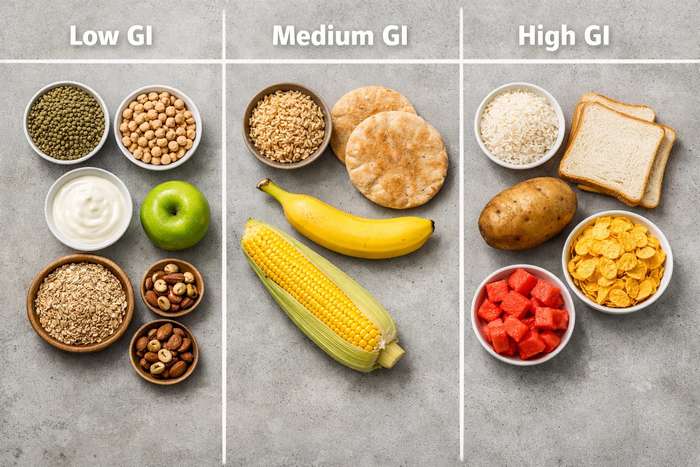
- Low GI Foods (55 or less): These foods cause a slow, gradual rise in blood glucose. Examples include most legumes (lentils, chickpeas, kidney beans), non-starchy vegetables, steel-cut or rolled oats, barley, quinoa, most fruits (apples, oranges, berries), nuts, and milk. These are your heart-healthy champions—they provide sustained energy without the dramatic blood sugar spikes.
- Medium GI Foods (56-69): These foods produce a moderate blood glucose response. Examples include whole wheat bread, brown rice, couscous, pita bread, and some fruits like pineapple and raisins. These can be part of a balanced diet when consumed mindfully.
- High GI Foods (70 or above): These foods cause rapid spikes in blood glucose. Examples include white bread, white rice, most processed cereals, instant oatmeal, potatoes, watermelon, and sugary snacks. These should be limited or paired with low-GI foods to minimize their impact on blood sugar. For guidance on which foods to limit, see our article on foods to modify in your diet.
The Connection Between GI and Heart Disease Risk
The relationship between glycemic index, glycemic load, and coronary heart disease (CHD) has been extensively studied. A major pan-European cohort study involving over 338,000 participants found compelling evidence linking high-GL diets to increased heart disease risk.

After a median follow-up of 12.8 years, researchers observed that participants in the highest GL quintile had a 16-18% greater risk of experiencing a coronary heart disease event compared to those in the lowest quintile.
The mechanisms connecting high-GI/GL diets to heart disease are multifaceted. Chronically elevated blood glucose and insulin levels can lead to insulin resistance, systemic inflammation, and dyslipidemia—characterized by elevated triglycerides and reduced HDL (good) cholesterol.
Meta-analyses consistently show that individuals consuming high-GL diets face 18-27% higher risk of coronary heart disease events. Understanding the role of saturated fat alongside glycemic load provides a more complete picture of dietary heart disease risk.
Notably, the research found that the association between glycemic load and heart disease was particularly pronounced in individuals with a BMI of 25 or higher. Overweight and obese individuals showed a 22% increased CHD risk per 50 g/day increment in glycemic load, while those with normal BMI showed no significant association. This suggests that body weight may serve as an important effect modifier in the relationship between dietary carbohydrate quality and cardiovascular risk.
How Low-GI Diets Protect Your Heart
Research from the American Heart Association helps explain the cardiovascular benefits of low-GI eating patterns. When you consistently choose low-GI carbohydrates, you help your body maintain better glycemic control, which has cascading benefits for heart health.

Better glycemic control reduces the triglyceride-to-HDL imbalance that characterizes metabolic dysfunction. Studies show that high-GI diets are associated with lower HDL cholesterol and higher triglyceride levels—both independent risk factors for cardiovascular disease. Low-GI eating patterns help reverse this unfavorable lipid profile.
Additionally, low-GI diets reduce oxidative stress and endothelial dysfunction—two key precursors to atherosclerosis and cardiovascular events. The endothelium, the inner lining of blood vessels, is particularly sensitive to blood sugar fluctuations.
Repeated glucose spikes damage these delicate cells over time, promoting plaque formation and arterial stiffness. Supporting healthy circulation and blood flow becomes easier when blood sugar remains stable.
Evidence from cohort studies confirms a dose-response relationship: each additional 50 grams per day of glycemic load is associated with approximately 18% higher coronary heart disease risk. This finding underscores the importance of not just choosing low-GI foods, but also moderating total carbohydrate intake for optimal heart protection.
Choosing Heart-Healthy Carbohydrates
According to guidance from the Cleveland HeartLab, prioritizing low-GI carbohydrates over high-GI refined options can significantly reduce cardiovascular risk.

Here are practical strategies for making heart-smart carbohydrate choices:
- Smart Swaps: Replace white rice with barley or quinoa. Choose sweet potatoes over russet potatoes. Opt for steel-cut oats instead of instant oatmeal. Select whole grain or sourdough bread rather than white bread. These simple substitutions can dramatically lower the glycemic impact of your meals.
- Prioritize Whole Foods: Legumes like chickpeas, lentils, and black beans are nutritional powerhouses with exceptionally low GI values. Incorporate them into soups, salads, and main dishes. Apples, berries, and citrus fruits offer natural sweetness with minimal blood sugar impact.
- Combine Wisely: When eating higher-GI foods, pair them with protein, healthy fats, or fiber to slow glucose absorption. Adding nuts to oatmeal, eating bread with avocado, or including vegetables with pasta are all effective strategies for moderating blood sugar response.
- Mind Your Portions: Remember that glycemic load considers both quality and quantity. Even low-GI foods can raise blood sugar significantly if consumed in large amounts. Use the GL concept to guide portion sizes, especially for starchy foods.
- Watch Your Salt: While focusing on carbohydrate quality, don’t forget other heart-healthy principles. Managing sodium intake works synergistically with low-GI eating to protect cardiovascular health and maintain healthy blood pressure.
Conclusion and Practical Tips
Understanding and applying glycemic index principles offers a simple, evidence-based strategy for heart protection. As documented in comprehensive nutrition research, selecting low-GI carbohydrates consistently can improve lipid profiles, reduce inflammation, and lower cardiovascular disease risk over time.

- Getting Started: Begin by identifying the highest-GI foods in your current diet and finding lower-GI alternatives. You don’t need to overhaul your eating habits overnight—small, sustainable changes accumulate into significant health benefits. Our ten eating strategies provide a comprehensive framework for making lasting dietary improvements.
- Use Available Tools: Consider using smartphone apps or online databases to look up GI values of common foods. Keep a simple food journal to track your progress and identify patterns. Many meal planning apps now include GI information to help guide your choices.
- Try a Structured Approach: If you prefer guided meal planning, our plant-based 14-day menu incorporates many low-GI principles and provides a practical template for heart-healthy eating.
- Think Long-Term: The metabolic benefits of low-GI eating develop gradually with consistent adherence. Focus on building sustainable habits rather than pursuing perfection. Even modest reductions in dietary glycemic load can translate to meaningful reductions in heart disease risk over time.
Remember, managing glycemic index is just one component of a heart-healthy lifestyle. Combine these dietary strategies with regular physical activity, stress management, adequate sleep, and other healthy habits for comprehensive cardiovascular protection. By making informed carbohydrate choices today, you’re investing in a healthier heart for years to come.